
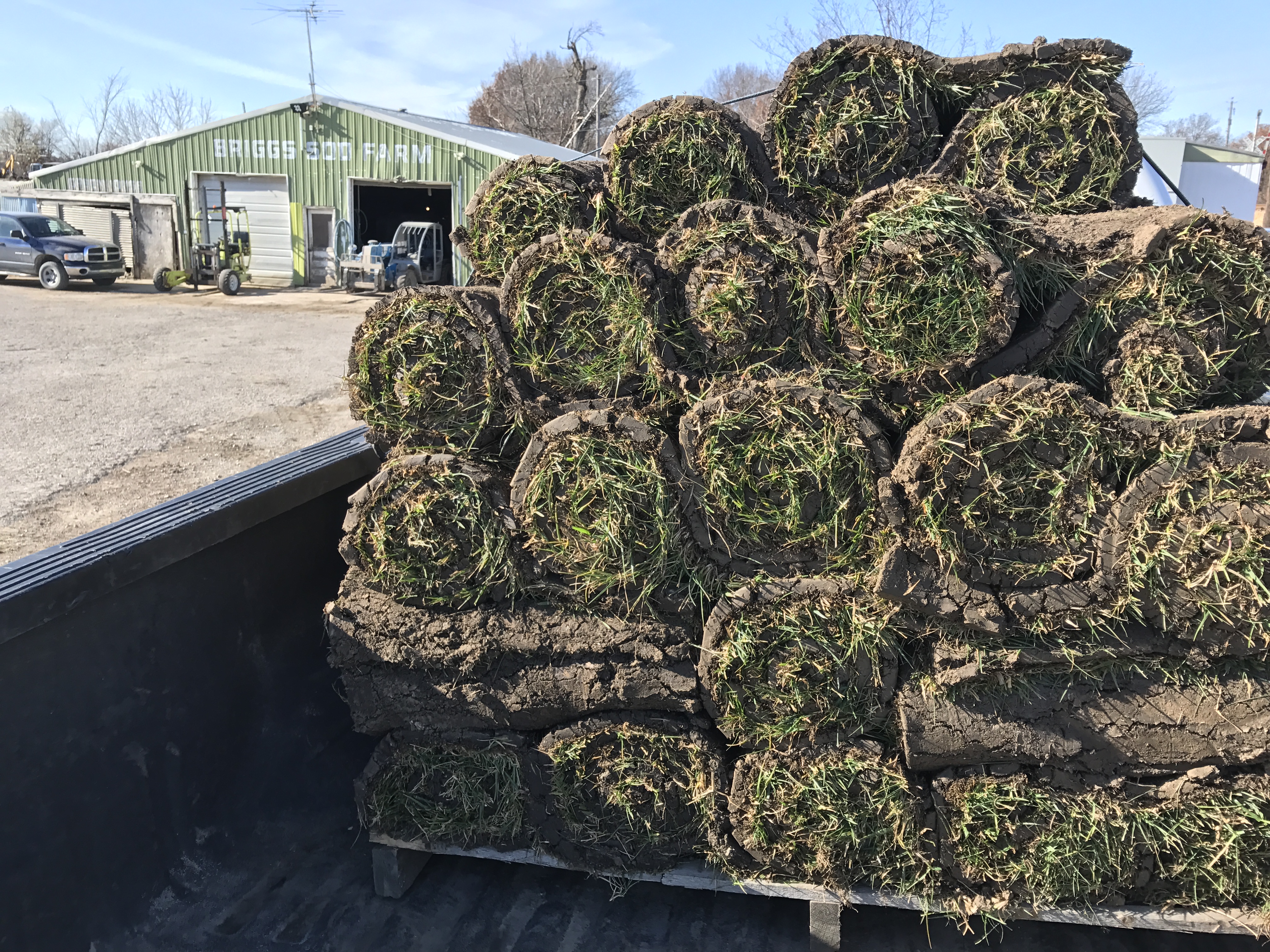
Do you have questions for new grass care? Wondering if you should use sod, or seed and blanket on a bare ground restoration? Learn the care recommendations for both sod and seed / blanket here. We compare and contrast seasonal installation and watering and mowing care instructions. Continue reading for our recommendations of your new grass care below.
Sod Care:
Depending on the time of year your sod is installed, will depend on the care needed. The two seasons are DORMANT (not mowing) and GROWING (mowing). Simply stated match the time of year whether you are mowing or not.
Watering
Dormant (not mowing) –
On nicer days if natural precipitation has been sparse, try to introduce enough water to keep sod from drying out or shrinking. Water is not needed to stimulate or promote growth.
Growing Season (mowing) –
New sod installations need water. For the first 5 days water needs to be plentiful. Your sod was just cut and is freak-out mode. Water makes it feel better. So much water that you can hardly walk on the sod with sinking or sliding. We’re talking a lot of water, multiple times a day. If you’re a measuring person, look to get 1″ in the first day.
Here’s a water table for help:
| Day from Install | Times / Day | Day Total (In) | Notes: |
| 1 – 5 | 2-3 | 1 | Really wet, don’t walk on it. |
| 6 – 10 | 2 | 0.75 | Cut water in half from Days 1-5. |
| 11 – 15 | 1 | 0.5 | Cut water 50%-70% again. |
If you are seeing weather that is hot, dry or windy you may need to change your watering plan slightly. The goal is to be sure to perform a deep watering vs. a light / shallow superficial water. Warm temps and/or wind may require the addition of a watering cycle to cool the grass. Never do you want to see your sod get dry. It should be moist at all times in the first 10 days. Under-watering or improper coverage tells are if the sod is shrinking and not touching the adjacent rolls laid or if you are seeing a color change. in the corners or regional areas.
Setting up an automatic watering system, when possible, is best for continuity and coverage consistency vs. hand watering. All though this is not always possible, verifying adequate area coverage and volume application is a must.
Mowing
Mowing should not occur until you can perform a successful Tug Test. This means that if you reach down and pull on the sod, it pulls back. If it’s “sticky” to the ground, you have some rooting occurring and that is a successful pass of the Tug Test. DO NOT try to rip the sod from the ground. Doing so will only damage the root system and start the process over. If the sod stays in place when tugging on it, it can be mowed. If the sod pulls up easily, do not mow and wait a few more days, continuing your watering schedule and then try the Tug Test again. A successful Tug Test will likely occur after 7-10 days from installation.
Seed and Blanket Care:
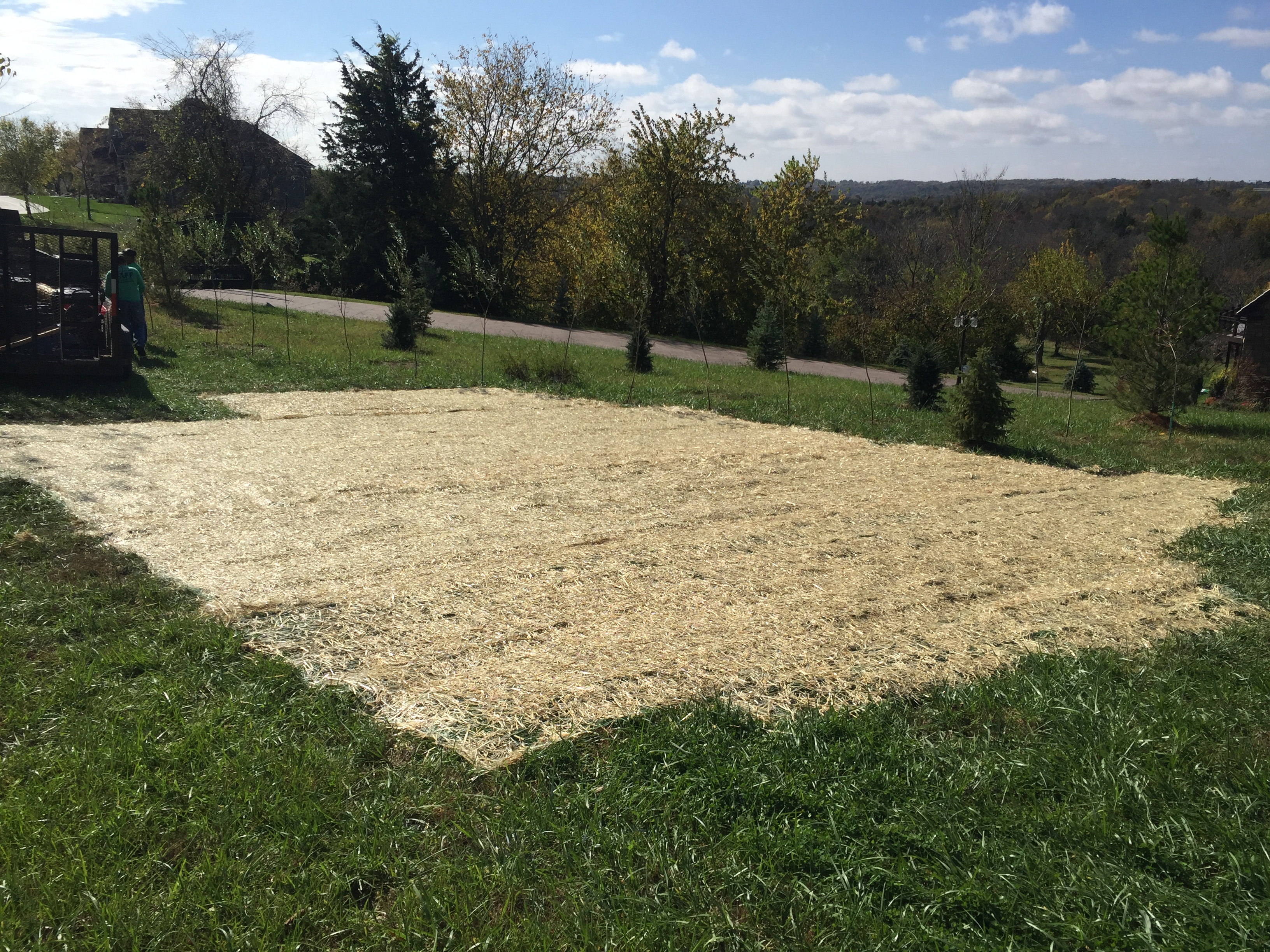
After the grading is complete, it’s time to restore. That means putting the ground back to grass. Seeding is a must if the time of year is right and maybe cost is a concern.
If you have bare grass, you need to seed. April 15 to May 15 and Aug 15 to Oct 1 are the dates I feel are an appropriate turf seeing window for our region. If you are only looking to overseed, keep it to the Fall. The older the grass can be by the time July and August roll around the better.
If you have blanket, most are made of straw and netting. The netting material can vary between very biodegradable and non-biodegradable poly netting. Depending on the variety, it can remain in place to degrade, or it can be manually removed. We don’t recommend blanket removal until you see the blanket getting pushed up by the new grass growing underneath. Use caution when you pull the blanket up, you will also pull some new grass with it. That’s ok. Continue to pull and remove the blanket and simply throw it away.

Know that different seed types have different germination periods. Often time a fescue and rye blend are used for bare ground restorations. This blend is optimal as the Rye grass has a shorter germination period (est. 4-7 days) than most other desirable turf grasses. Fescue is approximately >14 days and bluegrass is approximately >21 days. These germination periods are representative of seed planted during the aforementioned seeding timelines. Ground temperature is a key factor to germination time.
Watering
The key to a successful over-seeding is doing your best to keep the seed bed and seed moist. You want to try to avoid cracking soils once watering has begun. The ideal philosophy is frequency over duration.
Mowing –
Mowing can be done once the grass has germinated and grown to a height where it begins to lay-over. We want to keep the new grass standing tall and at attention. So, if the grass is tall enough to fall-over for too long it will inhibit the other new seed from sun and water. Dew is a great source of water for new seed. There’s a lot of dew in the Fall, one more reason Fall seeding is best.